India National Cricket Team Timeline
India National Cricket Team Timeline: 7 Incredible Milestones That Changed Cricket Forever
Introduction
The story of the India national cricket team is one of passion, patience, and powerful transformation. What started as a modest beginning under colonial influence has evolved into a journey filled with historic achievements, legendary cricketers, and unforgettable moments.
1932–1950: The Early Struggles
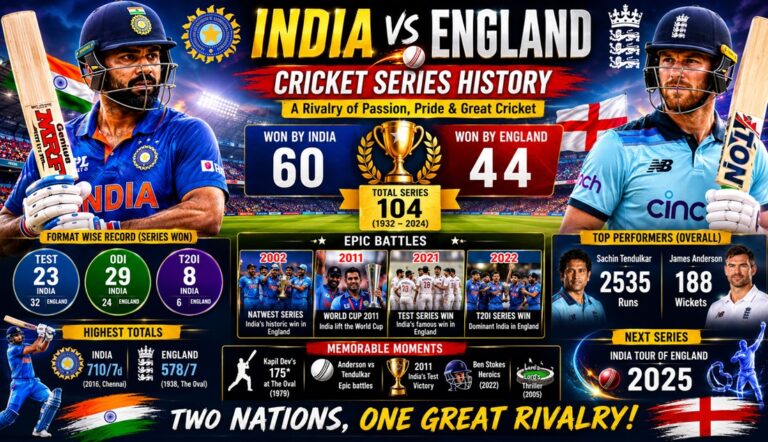
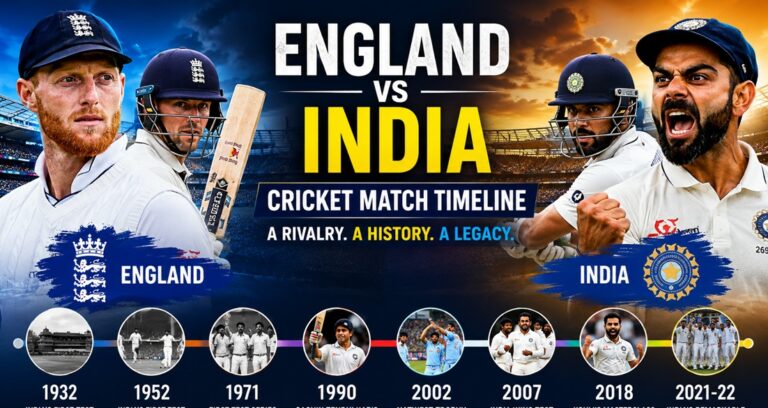
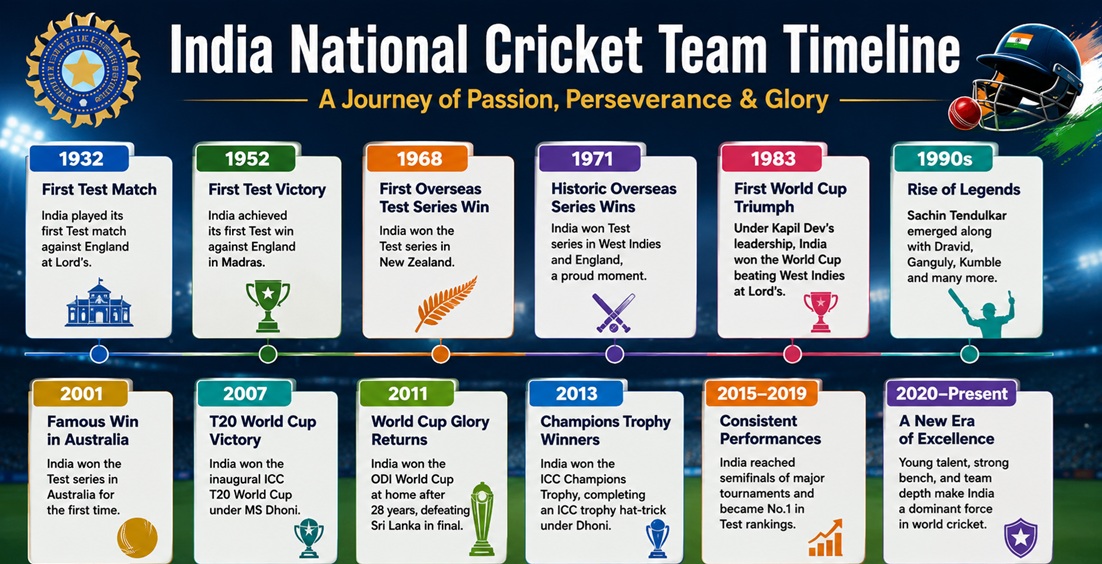
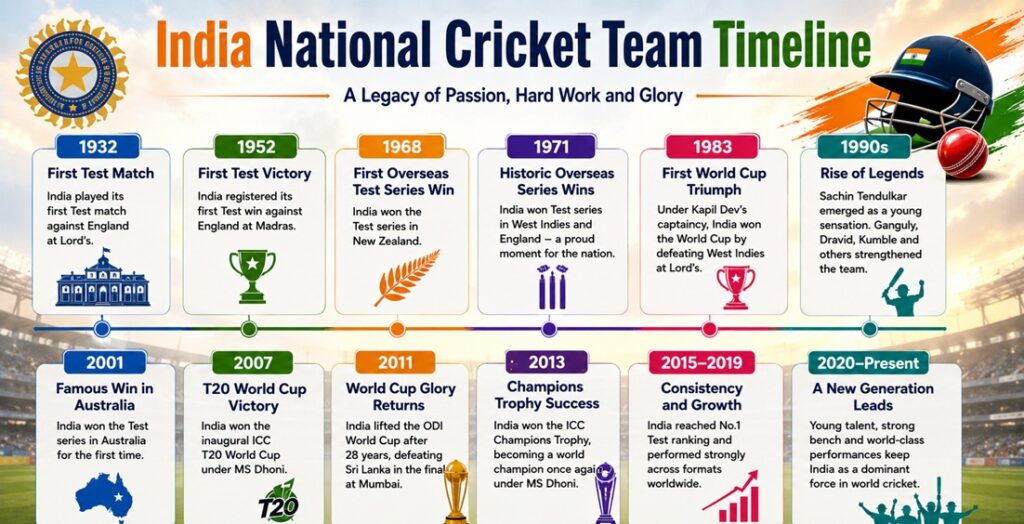
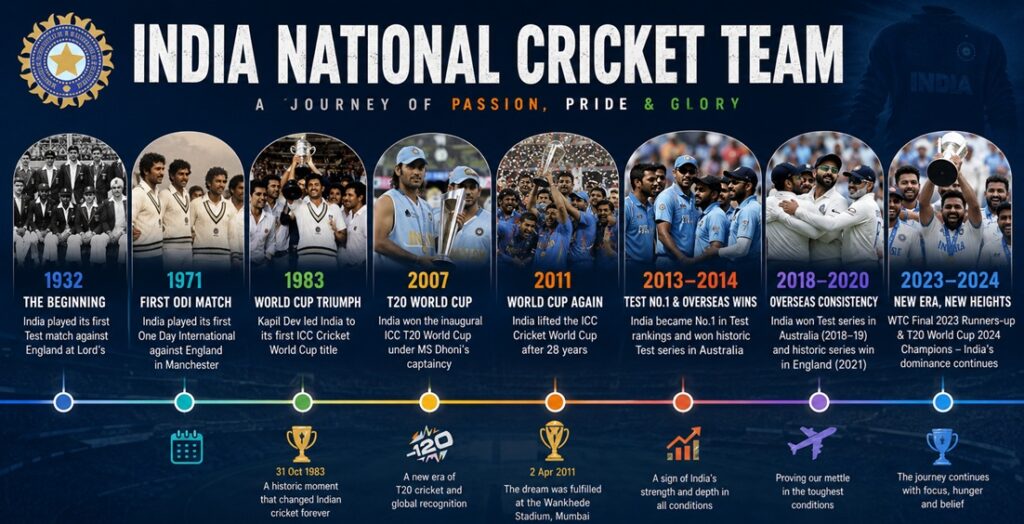
India officially stepped into international cricket in 1932, playing its first Test match at Lord’s against England. The team, led by CK Nayudu, showed determination but lacked experience at the highest level.
In the early years, India found it difficult to compete against well-established teams. Wins were rare, and the focus remained on gaining exposure and improving skills.
A historic moment came in 1952 when India secured its first-ever Test victory against England. This win boosted confidence and proved that India could compete internationally.
1960s: Laying the Foundation
The 1960s marked a period of gradual improvement. India began building a more balanced team, with a strong focus on spin bowling.
This era saw the rise of world-class spinners who troubled even the best batsmen. Their performances helped India gain respect in international cricket.
One of the biggest achievements of this decade was India’s first overseas series win in New Zealand in 1968. It was a significant step forward in the team’s development.
1970s: Breakthrough Moments
The 1970s were a defining decade for Indian cricket. Under strong leadership, the team achieved historic victories overseas.
In 1971, India defeated both the West Indies and England in their own conditions. These wins changed how the world viewed Indian cricket.
During this time, Sunil Gavaskar emerged as a batting legend. His consistency and technique made him one of the most reliable players of his era.
1983: The Turning Point
The year 1983 changed everything. India, under Kapil Dev’s captaincy, won the Cricket World Cup against all odds.
Facing the powerful West Indies in the final, India delivered a stunning performance to lift the trophy. This victory not only shocked the cricketing world but also transformed cricket into a national obsession in India.
It inspired a new generation of players and fans, laying the foundation for future success.
Late 1980s–1990s: The Rise of Icons
This period saw the emergence of some of the greatest players in Indian cricket history. Among them was Sachin Tendulkar, who made his debut as a teenager and quickly became the face of Indian cricket.
The team showed flashes of brilliance but struggled with consistency, especially in overseas conditions. However, players like Rahul Dravid, Sourav Ganguly, and Anil Kumble brought stability and strength to the side.
India reached the semi-finals of the 1996 World Cup, showing signs of becoming a strong contender on the global stage.
2000–2007: A Bold New Approach
The early 2000s marked a shift in mindset. Under Sourav Ganguly’s leadership, India became more aggressive and fearless.
The team started winning important matches abroad and challenged top teams confidently. Memorable moments included the famous 2001 Test series win against Australia and the 2002 NatWest Trophy victory.
Young players brought energy and belief, helping India evolve into a competitive unit across all formats.
2007: The T20 Revolution
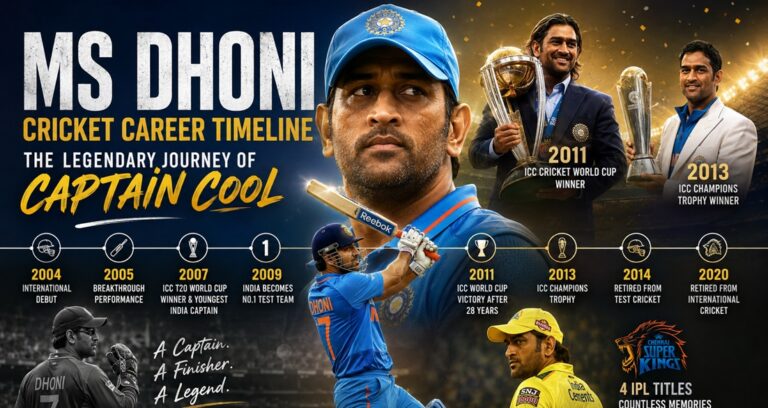
In 2007, India won the inaugural T20 World Cup under the captaincy of MS Dhoni. The young team played fearless cricket and defeated Pakistan in a thrilling final.
This victory changed the future of cricket in India. It led to the rise of T20 leagues and increased the popularity of the shorter format.
It also marked the beginning of a new era under Dhoni’s leadership.
2011: A Dream Fulfilled
The 2011 Cricket World Cup was a moment of pride and emotion for the entire nation. Playing at home, India lifted the trophy after 28 years.
Under MS Dhoni’s captaincy, the team defeated Sri Lanka in the final. Dhoni’s match-winning six remains one of the most iconic moments in cricket history.
For Sachin Tendulkar, it was the perfect ending to a legendary career.
2013: Continued Success
India added another major trophy by winning the ICC Champions Trophy in 2013. The team showed consistency and strong teamwork throughout the tournament.
This victory made MS Dhoni the only captain to win all major ICC trophies, further cementing his legacy.
2015–2019: Strong but Unlucky
During this period, India became one of the most consistent teams in international cricket. Under Virat Kohli, the team achieved great success in Test cricket and performed well overseas.
Despite strong performances, India fell short in major ICC knockout matches. Even then, the team maintained its position among the top sides in the world.
2020–Present: The Modern Era
The current Indian team represents a perfect blend of experience and youth. With improved fitness, depth in talent, and strong bench strength, India continues to dominate world cricket.
Players across formats contribute consistently, and the team performs well both at home and abroad.
The influence of domestic leagues like the IPL has also played a major role in developing young talent and preparing them for international challenges.
Major Milestones
- 1932: First Test match played
- 1952: First Test victory
- 1971: Historic overseas series wins
- 1983: First World Cup triumph
- 2007: T20 World Cup victory
- 2011: ODI World Cup win
- 2013: Champions Trophy success
Conclusion
The journey of the India national cricket team is a powerful story of growth, belief, and determination. From early struggles to becoming a global powerhouse, every phase has contributed to shaping its legacy.
With a strong foundation and a bright future, Indian cricket continues to inspire millions. The timeline is still being written, and many more historic moments are yet to come.
About the Author