Zimbabwe vs Rwanda Timeline
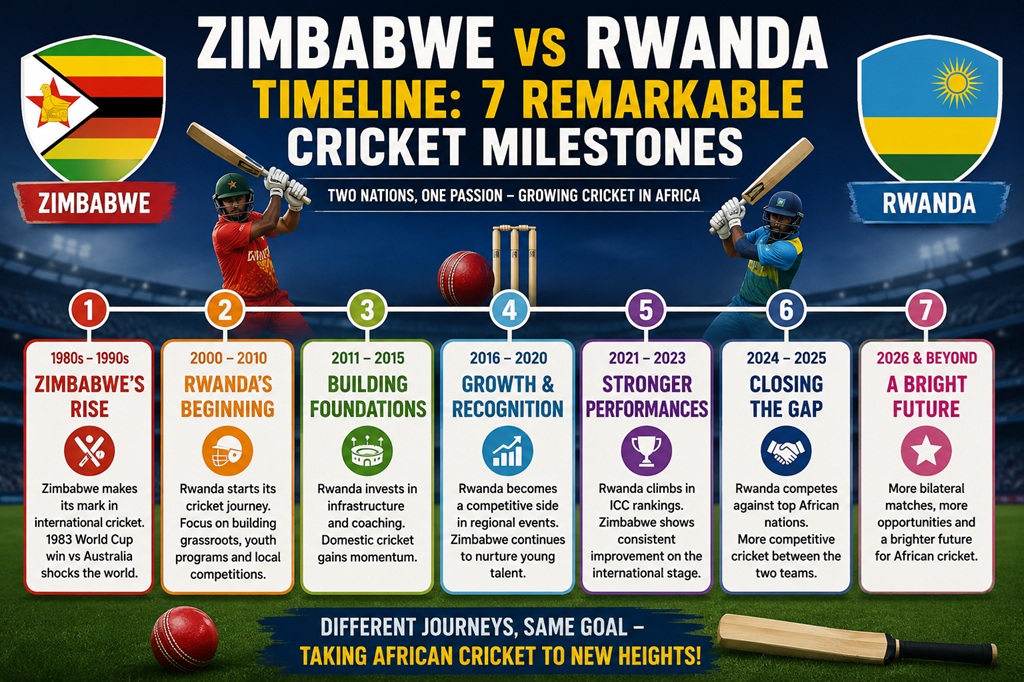
Zimbabwe vs Rwanda Timeline: 7 Remarkable Cricket Milestones
Cricket in Africa is often associated with major teams like South Africa and Zimbabwe, but several emerging nations are helping the sport grow across the continent. One such nation is Rwanda, which has made remarkable progress in recent years. The timeline of the Zimbabwe National Cricket Team and the Rwanda National Cricket Team reflects two different cricket journeys—one built on decades of international experience and the other driven by rapid development and ambition.
The Beginning of Zimbabwe Cricket
Zimbabwe has one of the richest cricket histories in Africa. Long before gaining international recognition, the country had an active domestic cricket culture. The national team became a respected force in world cricket after joining international competitions.
A major breakthrough came in 1983 when Zimbabwe defeated Australia during the Cricket World Cup. This historic victory announced Zimbabwe’s arrival on the global stage. The team continued to improve and eventually received Test status in 1992, becoming one of the few nations allowed to play the longest format of the game.
Over the years, Zimbabwe produced several talented cricketers who earned admiration worldwide. Their performances helped establish the nation as a competitive cricketing side.
Rwanda’s Cricket Journey Begins
Unlike Zimbabwe, Rwanda’s cricket story is relatively new. The sport gained popularity after the early 2000s when local communities, schools, and sports organizations began promoting cricket among young players.
Rwanda focused heavily on youth development rather than immediate international success. This strategy helped create a strong foundation for the future. Cricket gradually became one of the fastest-growing sports in the country.
The construction of modern facilities and the organization of local tournaments encouraged more young athletes to take up the game. Rwanda’s commitment to development has become a model for emerging cricket nations.
Timeline Comparison: Zimbabwe and Rwanda
1980s–1990s
During this period, Zimbabwe was already making headlines in international cricket. The team participated in major ICC tournaments and competed against some of the strongest sides in the world.
Rwanda, meanwhile, had little organized cricket activity at the national level. The sport was still in its infancy and had not yet gained widespread attention.
2000–2010
Zimbabwe experienced both successes and challenges during the first decade of the new millennium. While the team continued playing international cricket, administrative issues sometimes affected its progress.
For Rwanda, this decade was all about building. Cricket programs expanded, coaching standards improved, and more schools introduced the sport. Rwanda also strengthened its relationship with the International Cricket Council.
2011–2015
Zimbabwe remained a recognized international team, regularly facing established cricket nations. The team worked to rebuild and strengthen its squad after several difficult years.
Rwanda focused on grassroots development. Youth tournaments became increasingly competitive, and the country began producing players capable of competing in regional events.
Although the two nations operated at different levels of international cricket, both continued moving forward in their own ways.
2016–2020
This period marked significant growth for Rwandan cricket. More investment was directed toward facilities, coaching, and women’s cricket programs. Rwanda gained praise for its commitment to expanding opportunities for players of all ages.
Zimbabwe continued to compete internationally and developed a new generation of talented cricketers. Players such as Sikandar Raza helped keep Zimbabwe competitive against stronger opponents.
The gap between the two nations remained considerable, but Rwanda’s progress became increasingly visible.
2021–Present
In recent years, Rwanda has emerged as one of Africa’s most promising Associate cricket nations. Improved performances in regional tournaments have demonstrated the effectiveness of its long-term development strategy.
Zimbabwe has also shown signs of progress, recording important victories and strengthening its squad through experienced and young players.
While direct matches between Zimbabwe and Rwanda remain limited, the possibility of more encounters has increased as African cricket continues to expand.
Key Differences Between the Teams
One of the biggest differences lies in international experience. Zimbabwe has decades of exposure to top-level cricket, while Rwanda is still developing its competitive structure.
Zimbabwe’s players regularly face international opposition and have experience in major ICC events. Rwanda’s players are gaining experience through regional competitions and development tournaments.
Infrastructure also differs. Zimbabwe possesses established cricket facilities and a longer domestic tradition. Rwanda, however, has invested heavily in modern facilities and continues to improve its cricket ecosystem.
Impact on African Cricket
Both nations play important roles in African cricket.
Zimbabwe acts as one of the continent’s leading cricket ambassadors, demonstrating that African teams can compete on the global stage. The team’s history inspires many emerging cricket nations.
Rwanda represents the future of cricket development in Africa. Through smart planning, youth programs, and community involvement, the country has shown how a newer cricket nation can achieve rapid progress.
Together, these two teams highlight the diversity and potential of African cricket.
Looking Ahead
The future appears bright for both Zimbabwe and Rwanda.
Zimbabwe aims to strengthen its position in international cricket and challenge stronger teams more consistently. Continued investment in player development will be essential for achieving these goals.
Rwanda’s objective is to continue climbing the ICC rankings and establish itself as a leading Associate nation. With a growing player base and improved infrastructure, the country has every reason to be optimistic.
Future matches involving Zimbabwe and Rwanda could become important milestones in African cricket’s evolution. Such contests would provide valuable experience for Rwanda while showcasing the growth of the sport across the continent.
Conclusion
The Zimbabwe National Cricket Team vs Rwanda National Cricket Team timeline is not just about matches and results. It is a story of growth, ambition, and the expanding influence of cricket in Africa. Zimbabwe’s rich history and Rwanda’s rising potential represent two different chapters of the same journey. As African cricket continues to develop, both nations are likely to play significant roles in shaping its future.
About the Author