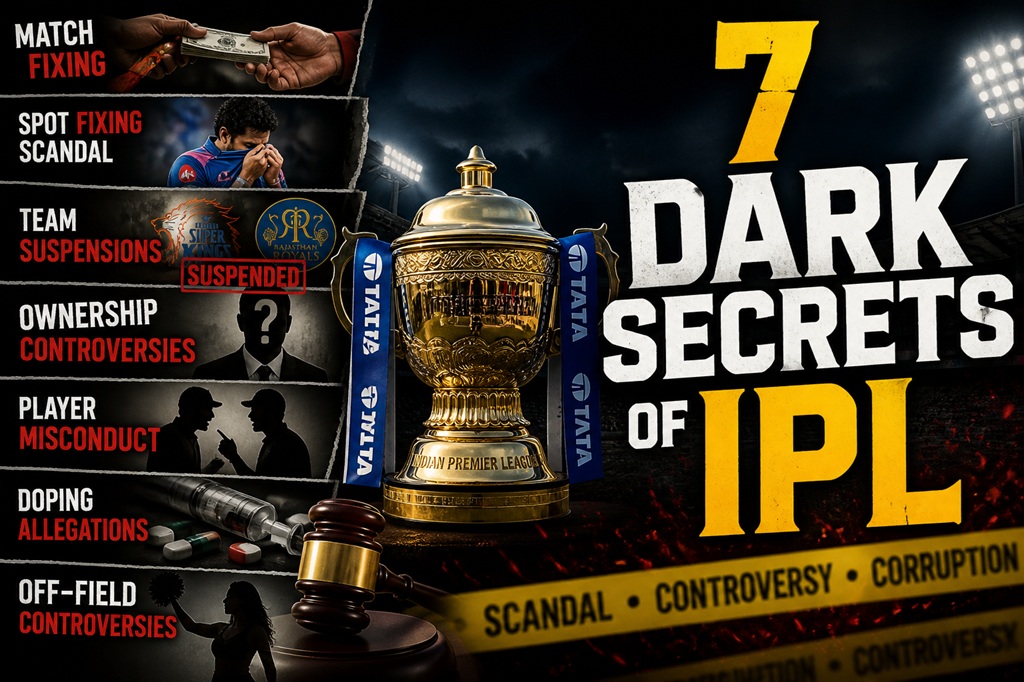
7 Dark Secrets of IPL
7 Dark Secrets of IPL
The Indian Premier League (IPL) is often celebrated as the most glamorous and profitable cricket league in the world. Since its inception in 2008, it has revolutionized cricket with its fast-paced format, star-studded teams, and massive fan following. However, behind the glittering lights, roaring crowds, and billion-dollar deals lies a darker side filled with controversies that have repeatedly shaken the league’s credibility.
Match-Fixing and Spot-Fixing Scandals
One of the biggest blows to the IPL’s reputation came in 2013 when the league was rocked by a massive spot-fixing scandal. Several players, including S. Sreesanth, Ajit Chandila, and Ankeet Chavan, were arrested for allegedly fixing specific moments in matches.
The scandal didn’t just involve players—it extended to team management and bookmakers, exposing a deeper nexus between cricket and illegal betting. The investigation revealed how players were approached and paid large sums to manipulate small aspects of the game, such as conceding a certain number of runs in an over.
This incident significantly damaged the IPL’s image and raised serious questions about the integrity of the sport.
Suspension of Teams
As a consequence of the 2013 scandal, two prominent IPL franchises—Chennai Super Kings and Rajasthan Royals—were suspended for two years in 2015. The suspension was linked to the involvement of team officials in betting activities.
The ban shocked fans worldwide, especially since Chennai Super Kings was one of the most successful teams in IPL history. The decision highlighted that even the most celebrated franchises were not immune to corruption.
Ownership Controversies
The IPL has also been plagued by controversies involving team owners. One of the most notable cases involved Lalit Modi, the founder of the IPL. Modi played a crucial role in establishing the league, but he was later accused of financial irregularities, bid-rigging, and money laundering.
In 2010, he was suspended by the Board of Control for Cricket in India and eventually banned for life. His exile added a dramatic twist to the IPL’s early years and exposed governance issues within the league.
Another controversy involved the ownership structure of teams, where allegations of hidden stakeholders and undisclosed investments surfaced, raising concerns about transparency.
Conflict of Interest
Conflict of interest has been a recurring issue in IPL history. The most prominent case involved N. Srinivasan, who was both the president of the BCCI and the owner of Chennai Super Kings through India Cements.
Critics argued that holding both positions created a conflict of interest, especially during investigations related to the 2013 scandal. The issue led to intense debates about governance and ethics in cricket administration.
Player Misconduct and Behavioral Issues
Over the years, IPL has witnessed several incidents involving player misconduct. In 2008, Harbhajan Singh slapped Sreesanth during a match, leading to a ban for Harbhajan.
Similarly, heated arguments, on-field aggression, and disciplinary breaches have frequently made headlines. While cricket is an emotional game, such incidents often cross the line and tarnish the league’s spirit.
Off-field behavior has also been problematic, with players getting involved in nightlife controversies, fights, and legal troubles during the tournament.
Doping Allegations
Though less frequent, doping cases have also surfaced in the IPL. Players like Prithvi Shaw faced suspension due to doping violations. These incidents raised concerns about the pressure on players to perform and the lengths some might go to gain a competitive edge.
Doping not only affects the credibility of individual players but also damages the integrity of the entire league.
Cheerleader and Off-Field Controversies
The IPL’s entertainment factor includes cheerleaders, after-parties, and celebrity appearances. However, this glamorous side has also led to controversies. There have been allegations of misconduct involving players and foreign cheerleaders, including reports of inappropriate behavior and exploitation.
Such incidents sparked debates about player discipline and the need for stricter regulations during tournaments.
Broadcasting and Financial Disputes
The IPL has also faced legal battles related to broadcasting rights and financial agreements. Multi-billion-dollar deals have often led to disputes between media companies and the BCCI.
These conflicts highlight the immense financial stakes involved in the league. While IPL is a commercial success, such disputes reveal the complexities and challenges of managing a global sports enterprise.
Political Interference
Given its scale and influence, the IPL has not been free from political interference. Decisions regarding team ownership, venue selection, and administration have occasionally been influenced by political factors.
The involvement of politicians in cricket administration has further complicated governance and raised questions about transparency.
Impact on IPL’s Reputation
Despite these controversies, the IPL continues to thrive as one of the most-watched cricket leagues globally. However, each scandal has left a lasting impact on its reputation.
The league has taken several steps to improve transparency, including stricter anti-corruption measures, player education programs, and better governance policies. The Anti-Corruption Unit (ACU) now actively monitors activities to prevent illegal practices.
Conclusion
The IPL is a perfect example of how success and controversy often go hand in hand. While it has transformed cricket into a global entertainment spectacle, its dark side cannot be ignored.
From match-fixing scandals to ownership disputes and player misconduct, these controversies serve as reminders that even the biggest sporting events must constantly strive for integrity and fairness.
For fans, the IPL remains a thrilling tournament, but understanding its hidden challenges adds a deeper perspective to the game. After all, cricket is not just about boundaries and wickets—it’s also about ethics, responsibility, and trust.
About the Author