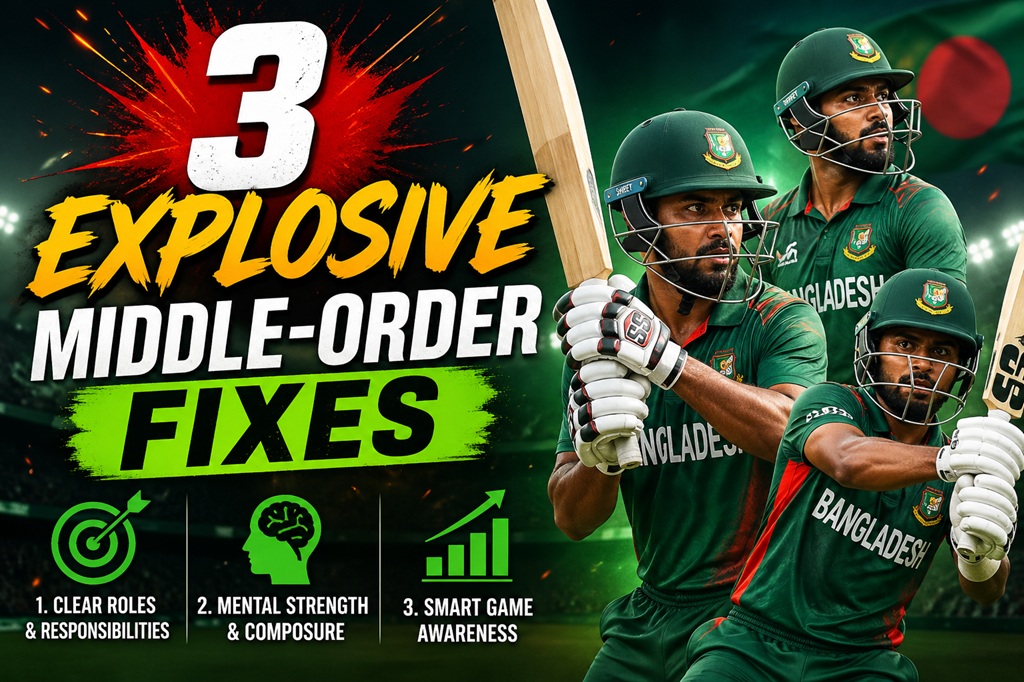
3 Explosive Middle-Order Fixes
3 Explosive Middle-Order Fixes
Bangladesh cricket has long been a story of immense potential mixed with inconsistency, especially in the batting department. While the top order often grabbed headlines with explosive starts, the middle order frequently struggled to consolidate or finish innings under pressure. However, recent performances suggest a promising shift, and one of the most vocal supporters of this transformation is veteran coach Mohammad Salahuddin.
Salahuddin, known for his sharp cricketing mind and deep understanding of Bangladesh’s domestic structure, has praised the noticeable improvement in the team’s middle-order batting. According to him, this evolution is not accidental but the result of deliberate planning, improved player roles, and enhanced mental resilience.
A Long-Standing Concern
For years, Bangladesh’s middle order has been a topic of debate among fans and analysts. After strong starts from openers, the team often faltered in the middle overs, losing momentum due to poor shot selection or inability to handle pressure situations. This weakness was evident in major tournaments, including the ICC Cricket World Cup, where Bangladesh failed to capitalize on good positions.
Players struggled to rotate strike, build partnerships, and accelerate when needed. The lack of a dependable middle-order core often left the lower order with too much to do in the final overs.
Signs of a Turnaround
In recent matches, however, Bangladesh’s middle order has shown significant improvement. Players are now displaying greater composure, better game awareness, and a clearer understanding of their roles. Whether it’s rebuilding after early wickets or accelerating towards the end, the middle order appears more balanced and confident.
Salahuddin highlighted that the team management has worked extensively on defining roles for each batter. Instead of playing aimlessly, players now have specific responsibilities depending on match situations. This clarity has reduced panic and improved decision-making under pressure.
Key Contributors
Several players have stepped up to drive this change. Experienced campaigners like Mushfiqur Rahim and Mahmudullah continue to provide stability with their calm presence and ability to anchor innings. At the same time, younger talents such as Towhid Hridoy have injected fresh energy and aggression into the lineup.
The blend of experience and youth has created a dynamic middle order capable of adapting to different match scenarios. While senior players ensure stability, youngsters bring intent and fearlessness—an ideal combination for modern cricket.
Mental Strength and Game Awareness
One of the biggest improvements, according to Salahuddin, is the mental strength of the players. In the past, Bangladesh batters often crumbled under pressure, especially in high-stakes matches. Now, there is a noticeable change in their body language and approach.
Players are taking responsibility instead of playing reckless shots. They are also showing better awareness of match situations—when to attack, when to defend, and how to pace an innings. This maturity is a direct result of focused coaching and increased exposure to high-level cricket.
Role of Domestic Cricket
Salahuddin emphasized the importance of domestic competitions in shaping this improvement. Tournaments like the Bangladesh Premier League have provided players with valuable experience, allowing them to face international-quality bowlers and perform under pressure.
The domestic circuit has also encouraged healthy competition, pushing players to improve their skills and consistency. As a result, the national team now has a stronger bench, with multiple options available for middle-order roles.
Technical Adjustments
Another key factor behind the middle-order resurgence is technical refinement. Players have worked on their shot selection, footwork, and ability to handle different types of bowling. Whether facing pace or spin, Bangladesh’s middle-order batters are now better equipped to deal with challenges.
Salahuddin noted that modern cricket demands versatility, and the team has embraced this requirement. Players are practicing innovative shots while also strengthening their defensive techniques, ensuring they can adapt to any situation.
Impact on Team Performance
The improved middle order has had a direct impact on Bangladesh’s overall performance. The team is now more competitive in both limited-overs formats and Tests. They are no longer overly dependent on the top order, making them a more balanced and formidable side.
In recent matches, Bangladesh has successfully chased challenging targets and posted competitive totals, thanks largely to contributions from the middle order. This newfound reliability has boosted team confidence and morale.
Challenges Ahead
Despite the progress, Salahuddin acknowledged that consistency remains the biggest challenge. While the middle order has shown improvement, maintaining this level of performance across different conditions and against top teams will be crucial.
He also stressed the importance of continuous learning and adaptation. Cricket is constantly evolving, and players must keep refining their skills to stay ahead. The team management is focused on ensuring that this improvement is not temporary but a long-term strength.
Looking Forward
The future looks promising for Bangladesh cricket. With a more dependable middle order, the team is better equipped to compete on the global stage. Upcoming tournaments and bilateral series will provide further opportunities to test and strengthen this unit.
Salahuddin remains optimistic, believing that this transformation is just the beginning. If the players continue to work hard and stay focused, Bangladesh could soon emerge as a consistent force in international cricket.
Conclusion
The improvement in Bangladesh’s middle order marks a significant step forward for the team. Under the guidance of experienced figures like Mohammad Salahuddin, players have developed greater confidence, clarity, and composure.
While challenges remain, the progress made so far is encouraging. A strong middle order not only stabilizes innings but also provides the finishing power needed in modern cricket. If this trend continues, Bangladesh’s batting lineup could become one of the most reliable in the game.
About the Author